



Healthy Eating for Seniors With Diabetes

On this page
As we age, managing diabetes becomes a more intricate balancing act — and food sits at the center of it. Proper nutrition is the cornerstone of blood-sugar control, and it plays a major role in preventing complications and protecting overall health. Seniors face particular challenges: changing appetites, other health conditions, and a need for simpler meals. The good news is that eating well for blood sugar doesn’t mean giving up the foods you enjoy. It means building a few dependable habits.
Why nutrition matters so much for seniors
Nutrition touches nearly every part of diabetes management. Well-balanced meals help stabilize blood sugar, steady your energy, and lower the risk of complications such as heart and kidney disease. Good eating also supports cognitive health, reduces the risk of malnutrition, and helps you stay mobile.
Aging itself raises the stakes. Over time, the body can become less sensitive to insulin and less efficient at processing carbohydrates — which means thoughtful food choices matter even more than they used to.
The role of protein in blood-sugar management
Protein deserves a place in every meal, and most seniors aren’t getting enough. Unlike carbohydrates, protein doesn’t cause sharp blood-sugar spikes — it’s a steady, reliable source of energy. It helps in three important ways:
- It slows sugar absorption. Protein slows the digestion of carbohydrates, smoothing out the rise in blood sugar after a meal.
- It curbs appetite and cravings. High-protein foods keep you full, which makes it easier to skip the high-sugar snacks.
- It protects muscle. Muscle is easy to lose with age; adequate protein helps preserve the strength and mobility that keep you independent.
Aim to include a portion of lean protein about the size of a deck of cards at each meal — grilled chicken, fish, eggs, tofu, or legumes like lentils. Pairing protein with a complex carbohydrate such as quinoa or brown rice makes for a balanced plate that keeps blood sugar steadier through the day.
Easy ways to get more protein
- Rethink snacks. Swap sugary snacks for Greek yogurt, cottage cheese, a boiled egg, nuts, or roasted chickpeas.
- Build a better breakfast. Many breakfasts are carb-heavy; add eggs, turkey sausage, or a scoop of protein powder, or top whole-grain toast with avocado and an egg.
- Add protein to salads and soups. Toss in grilled chicken, canned tuna, beans, or a boiled egg to make a dish more satisfying and nutrient-dense.
Simple vs. complex carbohydrates
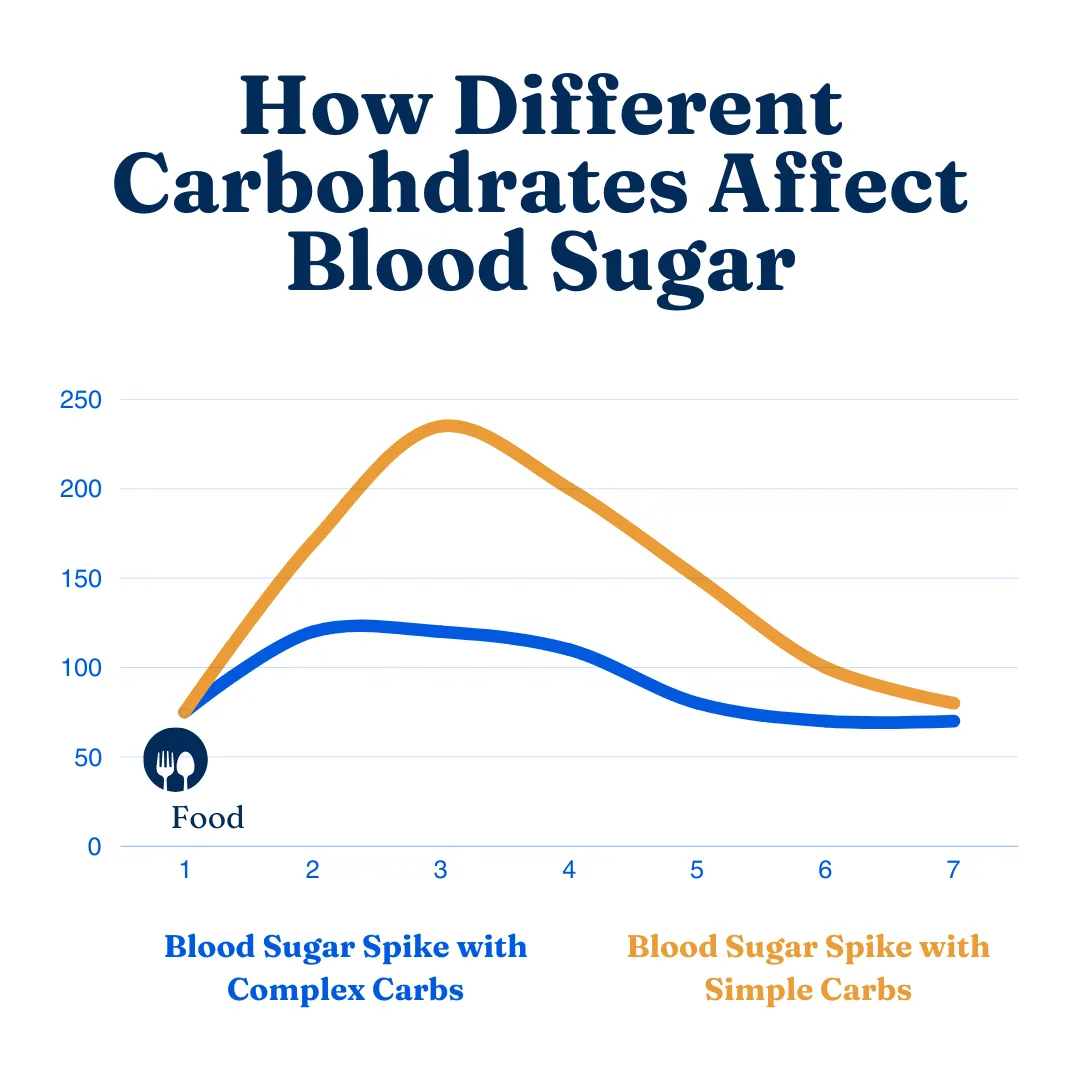
Not all carbohydrates behave the same way, and the difference matters for seniors.
- Complex carbohydrates — found in whole grains, legumes, and starchy vegetables — are rich in fiber and digest slowly, releasing glucose gradually.
- Simple carbohydrates — white bread, pastries, and sugary drinks — cause rapid spikes and crashes and are best kept to a minimum.
The fiber in complex carbohydrates does double duty: it supports digestion (helpful, since constipation is more common with age) and helps lower cholesterol and inflammation, which protects the heart.
Meal planning made simple
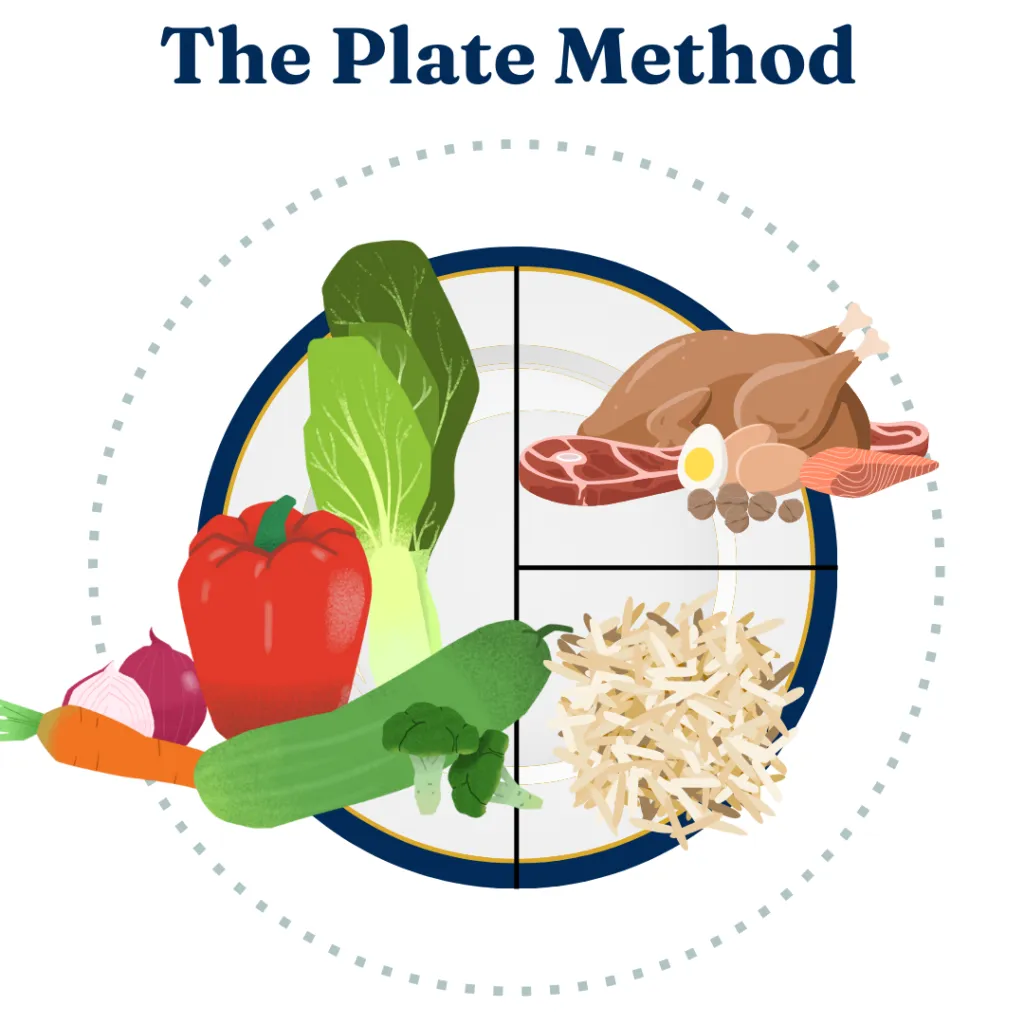
Planning meals doesn’t have to be complicated.
- Use the plate method. Fill half your plate with non-starchy vegetables, a quarter with lean protein, and a quarter with complex carbohydrates.
- Eat on a schedule. Aim to eat every four to five hours and avoid skipping meals — consistent timing keeps blood sugar in a steadier range.
- Snack wisely. A handful of almonds, a boiled egg, or an apple with peanut butter keeps blood sugar even between meals.
Fiber and healthy fats
Fiber and healthy fats are quiet allies. Soluble fiber — in oats, legumes, and fruit — slows sugar absorption, while insoluble fiber supports digestion; aim for 25 to 30 grams a day. For fats, favor the unsaturated kind found in avocados, nuts, seeds, and olive oil, which support heart health and add satiety. Limit saturated fats in red meat and full-fat dairy, and avoid the trans fats common in processed foods.
Hydration and hidden sugars
Sugar hides in everyday drinks, and dehydration can throw off blood sugar — so what you drink matters.
- Drink more water. Aim for about eight glasses a day.
- Skip the sugary beverages. Trade sodas and sweet teas for water with a squeeze of lemon or a few slices of cucumber.
- Read the label. Hidden sugars hide behind names like sorbitol, maltose, molasses, fructose, dextrose, and high-fructose corn syrup — even in foods marketed as “healthy.”
How MDWatch supports seniors
Managing diabetes gets more complex with age, which is exactly why MDWatch built a program around the needs of older adults. That includes health coaching with personalized meal guidance, ongoing diabetes education, and access to nurse practitioners when questions come up — so steady habits get the support they need to stick.
The bottom line
You do not need a perfect diet — you need a steady one. By leaning on lean protein, choosing complex carbohydrates, and keeping meals balanced and regular, you give yourself the most reliable tool there is for day-to-day blood-sugar control.
MDWatch Diabetes Program
Manage diabetes from home
Work with a board-certified care team that monitors your numbers remotely and adjusts your plan between visits. Most visits are $0 with Medicare — and there's no obligation to start.
Medicare accepted
You don't have to do this alone
It's all handled from home, with a licensed U.S. care team beside you and Medicare helping cover the cost of care.
- A licensed U.S. care team who knows your name
- Tirzepatide delivered right to your door
- Connected cellular scale to track your weight loss
- Personalized medication adjustments based on your progress
- Upfront pricing and no membership fees

"I've lost over 30 pounds, and I feel amazing."Gabriela Verified patient −30 lbs
Thanks — you're all set.
Our benefits team will review your plan and reach out shortly. Nothing is submitted to Medicare, and there's no obligation.
(Demo mode — no information was sent.)
Free & secure · No obligation · About a minute
What happens after you submit
- Share a few details
- We verify your benefits, free
- Get your personalized plan
Written by

Jacquelyn Will
Health writer · MDWatch
Medically reviewed by
Dr. Terri Riddiford, MD
Board-certified · Reviewed November 17, 2024
Continue reading
All articles


This article is for general educational purposes only and is not medical advice. It should not replace a conversation with a licensed healthcare provider who knows your full medical history. Always talk with your provider before starting, stopping, or changing any treatment.